Monday, October 31, 2011

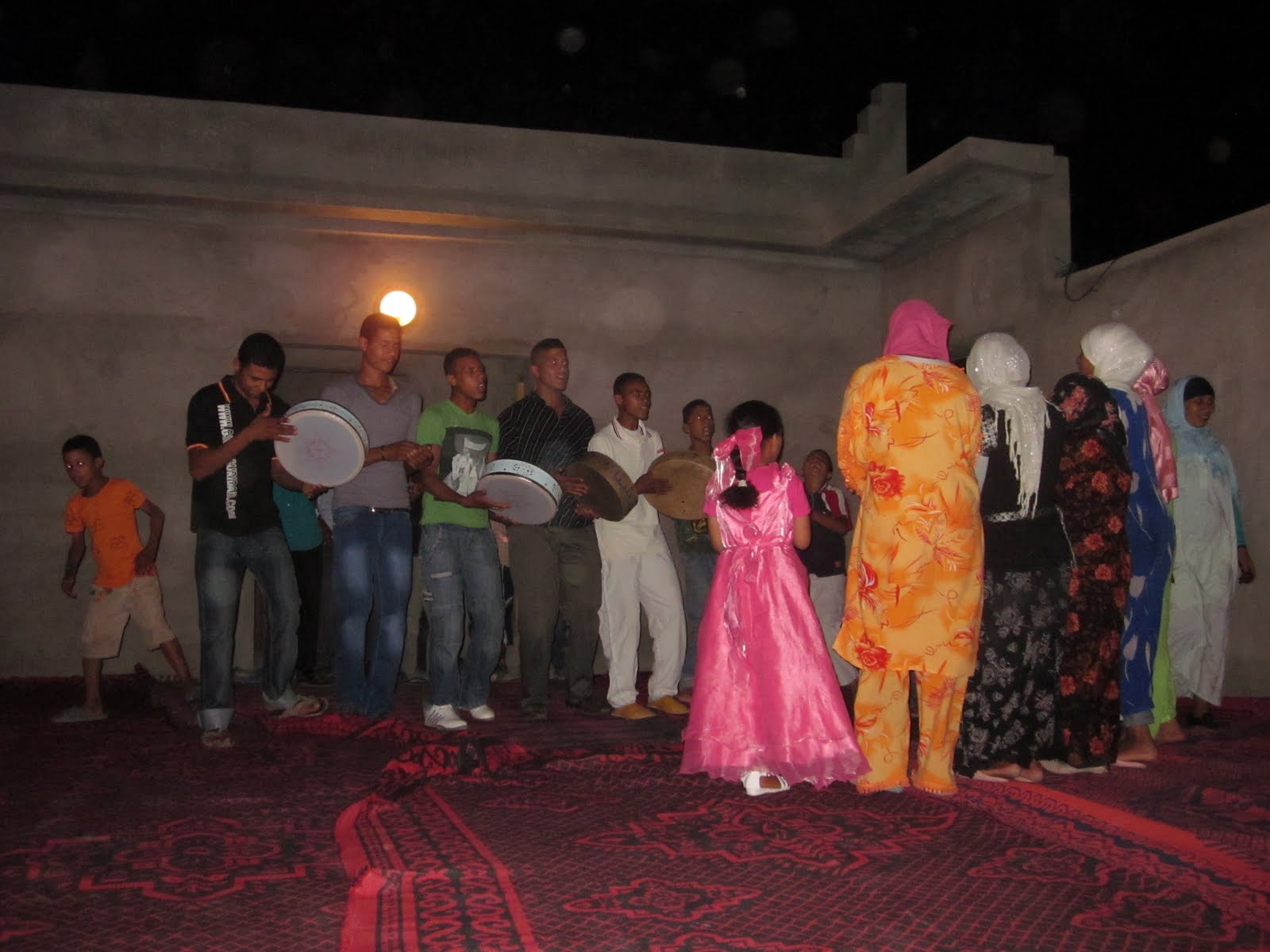
Sound of a Moroccan Wedding

Ramadan came to an end as did the 2.45am wake-up drums and call to prayer, which you got to hear for yourselves in my last post.

Finally, back to a normal sleep routine...or so I thought! 

Wedding season started in June and came to a halt during Ramadan.  I thought that meant the weddings were through until next summer, but apparently there were still weddings to be had.

I enjoyed one night of silence after the last day of Ramadan and then the weddings resumed.

This started around 12.30am and carried on until well past 3am :)


Miriam x


Sunday, October 30, 2011

Sound of Ramadan


This is really a video post...but, to help you understand, I've included an short excerpt from my previous entry 'Ramadan Report: The Late Edition'.

'...As soon as Lftar is over the women get back to business in the kitchen preparing dinner which is eaten anywhere from 9pm-12pm depending whose house you are visiting...Most people then have a short sleep until 2.45am, when they wake up for suoar, the last meal before the next day of fasting begins. Suoar is another hearty meal of tagine or duez.  


In larger towns and cities suoar is signaled by the early morning call to prayer. In my site, it was also signaled by drums! Imagine every morning, for one month being woken up by a parade of drums at 2.45am...'

Okay, so now you don't have to imagine anymore. Be sure to listen all the way through. 


Click HERE, close your eyes, pretend you have been dreaming away...


Miriam x


P.S. Smooches to Francesca (the best friend a girl could ask for), who sent me the amazing Flip used to make this...sound capture :)  

Sunday, October 16, 2011

Ramadan Report (The late edition)

Fes Medina
In Islam, there are five things (known as the five pillars of faith) that one must do in order to be a good Muslim. One of those is fasting during the month of Ramadan. 

From sunrise, until sundown (which is signaled by the ability to look at a thread from a short distance and tell if it is black or white)  Muslims are prohibited from eating, drinking, smoking, and sex. There are exceptions for pregnant women, the ill, the elderly, women on their periods and those that are traveling. For some, mainly those with the ability to adapt their schedule, Ramadan isn’t too difficult, it simply means sleeping all day and being awake all night. For those with day jobs however, the month is much more trying.  I felt most for those in the South as the temperature during the day was well above 30-40 Celsius. Can you imagine working in a field under the beating sun and not being able to have even a sip of water?? 

The Islamic calendar is a lunar one, so each year Ramadan moves forward a little bit. This year, in Morocco, it started on the 1st of August and ended on the 31st.

Around 7pm, after a day of fasting and working, families and friends gather for the most anticipated meal of the day, ‘Lftar’ (Break-Fast). Preparation for Lftar, begins once the late afternoon call to prayer is called, which was around 4pm. Men go to the mosque to pray and the women get busy in the kitchen in order to have everything ready in time. The food is generally the same in every household. Three dates and a sip of water is the correct way to break the fast, followed by a table full of chebakia (Moroccan sesame cookie which is shaped into a flower, fried and then coated with honey), dates, olives, cookies, cake and of course sweet mint tea. 

Fat bread is the main attraction at the table and is only eaten during Ramadan. It is basically a flatbread which has been stuffed with a variation of sautéed onions, peppers, small amount of sheep fat, parsley, cumin, paprika and red pepper. Trust me, it may not sound fabulous, and while it is quite greasy and most certainly not healthy for you, it was absolutely delicious and after all, one month a year can’t hurt, right? The finale of lftar is Harira, which is a Moroccan tomato, lentil and chickpea soup-one of my favorites.


As soon as Lftar is over the women get back to business in the kitchen preparing dinner which is eaten anywhere from 9pm-12pm depending whose house you are visiting. This is typically either duez (pressure cooked meat and vegetables) or tagine. Most people then have a short sleep until 2.45am, when they wake up for suoar, the last meal before the next day of fasting begins. Suoar is another hearty meal of tagine or duez. In larger towns and cities suoar is signaled by the early morning call to prayer. In my site, it was also signaled by drums! Imagine every morning, for one month being woken up by a parade of drums at 2.45am

While many volunteers choose to fast, I didn’t. I was honest with my family and friends who continually asked if I was fasting. Some volunteers told little white lies and when asked, said that they were fasting, in order to score brownie points with community members. There were also a few volunteers who were asked to open their mouths and stick their tongues out so that it could be determined whether or not they had cheated and had a sneaky glass of water or snack. 

Life in general comes to a slow churn during the month of Ramadan. With most shops only open a couple hours a day, or very late at night and not as frequent options for transportation. With everyone trying to keep cool and rest inside their homes during the day, the streets of my site were pretty much like a ghost town. Work in the fields was either completed in the early hours of the morning after suoar, or in the late afternoon. I broke-fast (okay, I technically wasn't breaking-fast) with my Moroccan friends and family regularly, and developed quite a craving for fat bread and harira. I only experienced suoar once and that was while visiting my host family in Ait Hamza, with my brother Carl.


Carl, came to visit me during the first week of August. While Ramadan isn’t the most ideal time to visit Morocco it was an adventure and a first for both of us and I’m pretty sure he enjoyed it! He was able to see Fes, my site and surrounding villages and my training site, Ait Hamza.

While in Fes, we went to the ‘Ramadan carnival’, which took place in the large square next to Bab Boujloud. Think of the most gypsy-ish carnival you can imagine and you will be on the right path to imagining what this was like. The main attraction was the ferris wheel, which as you know normally crawls around at a very slow speed allowing you to see the views from the top of the wheel. Apparently, Moroccan ferris wheels are different. This one flew around at light speed, which was funny until we all looked up at what was holding our carriage onto the wheel-a large rusty nail bent in half hooking us on! Not to mention that when we went to enter the carriage, the floor was covered in vomit. When I told the gypsy (who refused to give me his tears…) carnival man that there was vomit and asked him to please give us the next carriage, he simply threw some cardboard over the vomit and told us to get in! Haha, sigh, oh Morocco.

Carl and I spent the next night with my host family in Ait Hamza. We arrived in time to break-fast, spent some time chatting with the family and then went to bed around 12pm. Hafida woke us up at 2.45am for suoar. I’m sure if you ask Carl, he will tell you this was his favorite hour of the trip…right Carl? Carl is a vegetarian and while he was prepared to eat a little meat in order not to offend anyone, I don’t think he was prepared to be woken up at 2.45am and have a giant (and I mean Giant) platter of meat put in front of him! He was a trooper though and nonchalantly dipped his bread in the sauce avoiding any masses of meat. Banana flan was served for dessert and back to bed we went.

After that he got to spend a couple days with me here in site, experiencing the wonders of public transport in order to get here. He met all my friends and family here and everyone was so happy to have him, including me. While he was here, we hiked out into the mountains surrounding Tounfite and visited some of the tiny dwars (villages) scattered throughout the mountains. We accompanied Moses, who was recruiting women for this Fall's Maternal Health and Childcare training, which takes place next week. It was my first time in the mountains and it was especially nice to have Carl there to witness the simplistic way of life (most of the dwars are without running water or electricity) and of course the culture. The dwars reminded me of the grandfather's house in the classic film Heidi with Shirley Temple.

After Carl’s visit I had a short getaway to Budapest and Hedervar in Hungary for a good friends wedding. Despite a momentary hiccup in happiness, I managed to have a fantastic time in Hungary. I not only met some really great people and made new friends, but I also got to be a part of Barbara and Attila’s most special day, which was fairy-tale beautiful.

Speaking of weddings, wedding season here in Morocco is almost over with. It began in mid-June, stopped for Ramadan and will be complete in the next couple weeks. Last night my neighbors had a wedding. It was quite possibly the town’s largest wedding of the season and it took place right next to my house-lucky me! It started with a parade of cars honking their horns through town for about an hour at 4pm yesterday. Then came the drums. I could hear them getting closer and closer and they took stage pretty much outside my front door. The drumming went on for a few hours and then came the band. I’m telling you I hit the jackpot :P Music shook my house until 5.30am this morning!!! L’Humdullah (thanks be to God) it will all be over soon…that is until next year. 


I had dinner with my landlords family last night, and they explained to me that the Caid (Mayor) of Tounfite came to the wedding house earlier and smeared oodi (rancid butter) over the front door and left a glass of milk for the bride to drink. Apparently, the oodi is for luck and the milk is so that the bride will be as white as the milk and will either lose existing freckles or prevent her from ever getting any...in case any one was wondering how to get rid of their freckles...you are welcome. :P

Fall has arrived and with it comes the cold. The smell of woodstoves has returned, bringing back that smoky-lumberjack smell to all my washing as it dries on the roof. The sound of women chopping wood is constant throughout the day, as are the repetitive conversations about the cold, such as “illa asmid” “illa iqrf” “mani furnonm” “is ghorm isherdin” “is ghorm lmonta” (there is cold, there is cold, where is your woodsotve, do you have firewood, do you have blankets?) Along with chopping firewood and all their other daily tasks, the women can also be found on the roof sorting through the recent harvest of corn and grains, leaving it on the roof for the sun to dry out.

I’m looking forward to winter here. For me, it is the most beautiful time in my site. Waking up to a view of snow capped mountains everyday, cozy in my room with my little woodstove keeping me toasty. While most certainly not a lazy or easy one, the simplicity of life here is what I relish the most.
Heading into the mountains
Walking to an outer dwar of Ait Hamza
Typical Lftar Spread
Ferris Wheel of Death 
Aith Hamza
Moroccan Car Wash in Ait Hamza
Camel anyone? 
Overlooking the Tanneries 


Brunch at Cafe Clock
My Henna'd Hands & Feet

Wednesday, August 31, 2011

Almost Forgot!

I forgot to mention that during our time in Tinghir, I slipped off to Hdida for a a couple days.

While in Hdida, Marisa and I hiked into the mountains to visit a family of nomads as she had heard they were living in caves, above her village. I wish I could have taken pictures, but they were very shy and not used to visitors and so I didn't want to impose any more than we already were. The men of the family were out at the time, but the women and children were home. From what I could tell, there seemed to be two main caves. We sat in the first, which contained bags of clothes and blankets and a home made loom, which the mother weaved on the whole time we were there. There were three small girls who didn't take their eyes off of us throughout the entire visit, too.

We drank mint tea and watched the mother weave, while making small talk for an hour or so. Afterwards, we moved into the next cave, which was the kitchen. It had an open fire stove, with a cauldron hanging over it, which must have contained dinner. Chickens ran freely in and out of the cave, across the walls of the stove, and sometimes hopping up in and out of a small window! We sat with two women and ate fresh warm flat bread with olive oil and drank more mint tea. The caves were not very big (I couldn't stand up in either of them) and it was crazy to think that about ten people slept in the one cave, especially in the heat of summer. There were dogs surrounding the premises, which were good at their job of scaring people off, we had to keep rocks in our hands as we approached and left the area.

I can't tell you how amazing it was to see their way of life. When I went to Spain last August, I got to crawl through an entire community of caves from when the Muslims were being forced out of Spain. It was amazing to me then to think that people used to live in the caves, but to actually see people living in these caves, words just can't describe.

The main reason I went back to Hdida, was for Marisa's host sisters' wedding. Some of Marisa's neighbors loaned us some very fancy Kaftan's to wear for the occasion, which was fun. Gifts consisted of heaps and heaps of blankets, which you can see in the pictures below. They were stacked so high the bride couldn't see over the table in front of her. In the picture below, the bride is hidden under silk scarves, which is the tradition in southern Morocco.

I attended what can be compared to the bridal shower, only it took place the day before the wedding. As you can tell from the pictures, it was women only, aside from small children and very close male family members. Everyone gathered on the roof of Marisa's host family's place and after a couple hours of aheydus (traditional berber drumming and singing/chanting, with some yelping mixed in), we all gathered around low tables to eat.

The first course was sheria, which is basically chopped up angel hair pasta topped with powdered sugar, raisins and nuts. Very sweet and strange. The main course was large platters of meat and olives with bread. Dessert was a variety of fresh fruit in baskets. The bride remained under the silk scarves and after all the guests finished eating she and her mom and grandmother ate. The food was slipped under the scarves though, so not even a glimpse of her was seen.

While in Hdida, I also helped to paint Marisa's Cooperative building. Marisa was put in contact with a 'trek/adventure' tour company based in London, which had a group of 15, sixteen-year old girls who were signed up to come to Morocco for a week. Before they came, they met regularly in East London to learn about camping/survival techniques and all the other stuff adventure camps teach you. The tour included a community outreach project, followed by a three day trek through the Dades Gorges. Marisa and Stacey developed their project, which consisted of painting the inside of the Cooperative building and building display cases for their products.

The girls were all really lovely, but it was entertaining to hear their side talk about not being able to shower and all the differences from their lives in London. I felt like I was in London with all the accents! It made me think back to when I first came into country, all most a year ago, and all the comparing and contrasting I did then. I can't believe that in two weeks, I will have been here a year!

Miriam x

Craft Fairs and the Like

After an enjoyable July 4th weekend, it was back to work and back to craft fairs...

The first fair was Peace Corps sponsored, Marche Maroc Essaouira, which took place July 7th-10th, 2011. In preparation for this fair, I created business cards, product tags and a brochure for the Cooperative. Keeping sustainability of these new marketing items top priority, I took Rebha two hours away to the nearest professional printer and we spent quality time there making sure she knew what was what on the USB and how to request copies printed, etc... Eventually, I will teach her how to change the informational content too, but we have to start with basic computer skills later this year.

As for the craft fair, it was the same story as all the other Peace Corps sponsored Marche Maroc's; guaranteed sales to other Peace Corps volunteers, their families and staff, but this time next to the beach. We did okay financially at the fair, but it just simply isn't sustainable sales outlet. We did have our second ever non-Peace Corps related sale at the fair, which was a small relief.

On a side note, I really enjoyed returning to Essaouira, it is a fantastic old city. However, I wouldn't recommend going for the beach alone, unless you enjoy wind sports as it's known as Morocco's 'Windy City' and it's a bit of a sandstorm.

On the 14-hour bus ride to Essaouira, I gave Rebha a nicely bound notebook I'd brought with me from the USA and explained that it was for the Cooperatives money records. Up until that fair, there were absolutely no sales or financial records for the co-op, beside from the ones in Rebha's head. The Cooperative pays for Rebha's travel to and from the fairs and her meals each day, and so I explained that to prevent any confusion about finances with the women, there should be a record that the women can look at and see whenever they want.

The book came in as a handy visual aid at the end of the next craft fair, which was in Tinghir. This was a Ministry sponsored craft fair (the one Rebha networked and found out about at the Rose Festival), which took place July 19th-29th, 2010. This was a loooong craft fair, in both hours and days. It was open from 9am until 11pm each day. To make it even longer, the Ministry failed to advertise the craft fair, at all. So until the weekend, when the locals got word of the event, no one came and I mean not a single person. Over the ten days, we ended up selling two carpets for half price. The meals and transport ended up being more money than the Cooperative actually has, and now we are operating at a loss. Brilliant.

Rebha realizes the situation, but she doesn't seem to be grasping the big picture, as I'm currently trying to play devil's advocate with her, as she tries to persuade me that we should go to Zagora next month, for another Ministry sponsored craft fair...I'm still focused on getting them exporting. Rebha has also come up with two new ideas to expand their product line; shoes and bags. She made friends with a man called Murad, who makes shoes, while we were at the fair in Tinghir. They discussed the possibility of incorporating small samples of carpets into his sandals. As he works with leather, they also discussed the possibility of leather messenger bags with a carpet sample incorporated into the from flap. I had suggested this to Rebha when I first came into site, but she didn't think much of the idea then. I'm glad she has come around though, as I believe the bags will sell very well if they are made to hold a laptop.

Not much progress elsewhere with the Cooperative, thanks to the slow times of Ramadan...which I'll fill you in on soon!

Miriam x
Essaouira
Rebha at the beach (she is terrified of the water)
Cooperative Chorouk's Booth
Working on a sale
Moroccan Horse Trailer going over the Tizi-n-Tishka from Marrakech to Ourzazette
Our booth at the Tinghir Craft Fair


Monday, August 29, 2011

Look who's back, back again...

It's almost September, which makes me a bad blogger, as now I will take you back in time to July...where we last left off!


So, it's the beginning of July and for obvious reasons, my Moroccan friends and family had no plans to celebrate July 4th, but American holidays are something to be shared here. Especially, according to Peace Corps 2nd Goal, 'Helping promote a better understanding of Americans on the part of the peoples served'. I take that goal and stretch it even wider than America and share all the British holidays too. As I explained to my fellow PCV Falisha, who just before the 4th jokingly asked me, "but, Annemarie, don't you feel so torn on the 4th, being a nus-nus (half-half)?" To those of you reading who know me, you know that my response was, "you know me, any reason to celebrate!" Dual citizenship=Double the fun  


And so, celebrate we did...4th of July, Moroccan style (which means minus all the coolers of ice cold...yeah, you get it). We made it into a double hefla (party) as my host sister Yassmine, also turned two that weekend and Hayat (my host Mom) had asked me if we could have an American birthday party for her. Birthday's are another cultural exchange as they are not celebrated here. Not surprisingly, most people don't even know how old they are. 


Knowing that Mamaksu (my host grandmother), has a Moroccan BBQ, I went out Saturday morning and bought steak, peppers, onions and courgette, to make shish-kebabs with. While everything was marinating in a tasty garlic-citrus marinade (my own creation), I made some sauteed potatoes as a side dish and also baked a chocolate chip pound cake for Yassmine's birthday cake, along with some Jell-o. 


In the afternoon, I took everything over to Mamaksu's, where we all helped to cook the shish-kebabs. My new site mate Emma, and Hessna, the pharmacist also joined in for the festivities. After getting Yassmine cleaned up from the mess she becomes when she eats, Hayat dolled her all up (and I mean All Up, as you can see fro the pics!) for a photo shoot and cake presentation. Hayat also made her a cake, so she had 2 cakes for her 2nd birthday...going to have to do some baking ahead of time next year! 


While we were eating we talked about what the 4th of July means and I know that my family understood what I was explaining to them, because they too asked how I choose what side I am on. I told them I don't have to choose, drew an imaginary line down my middle and said half is British and the other American. Not missing a beat, Mamaksu said, "La La La Miriam (No No No, Annemarie)." Then she drew two imaginary lines, dividing me into thirds, and said, "tgit nus Tamirikanit, nus Niglasia, awd nus Tamagribit" (you are half American, half English and half Moroccan).  Pride. 


Shish Kebab Madness
My Baking Skills
Before...
Before...
Getting all Dolled up
Blowing Kisses
Birthday Girl
Two Cakes for Two Years
Stylin' & Profilin'
Mmmm Candy & Cake...
Blowing out the Candles
Birthday Smooches
Me-Hessna-Emma-Mamaksu & Yassmine
Hayat-Me-Emma-Mamaksu & Yasmine...with her eye on the prize!


Saturday, July 30, 2011

I'm Back!

No, I did not fall off the face of the Earth!

Since my last entry I’ve been here, there and everywhere in Morocco…and now where to begin telling you all about it?! I’m aiming to put a post up every other day or so over the next week to catch everyone up!

SIDA/VAST Training
In the beginning of June, I went to Rabat for training on how to put together and get funding for an HIV/AIDS awareness project (it’s called SIDA over here, as the French call it). We were able to take Moroccan counterparts to the training and so I invited Hessna, the pharmacist in Tounfite. Unfortunately, at the last minute she ended up not being able to attend due to her work at the pharmacy and so I went solo. I still plan to work with her and put together some kind of ‘AIDS Awareness Community Day’ in Tounfite either later this year, or next Spring, enshalla.

It was a real shame that she couldn’t come with me, as it would have been a pretty 'big deal'. Funding for the training allowed us to stay in a 3-star hotel and meals were included...heck, it was a big deal for me! Also, there is a small beach in Rabat (nothing special as it’s in such a big city), but one evening after training, Marisa and I took two Moroccan counterparts to it as they had never seen the ocean before. It was fun to watch them walk in sand for the first time and walk in the water.

On the third day of the training, we took a field trip to Casablanca, which was a treat in itself as we took a private CTM bus (posh coach), which had air conditioning, which is something I haven’t had in a while! The field trip was to an NGO called Asssocition du Jour, the only
organization in Morocco that works directly with HIV positive people.. The NGO was created by Moroccans, in order to provide assistance to people who are HIV/AIDS positive and need to come to Casablanca for doctor’s appointments, etc…It was quite a powerful experience as we got to hear firsthand stories of how their lives are affected, how they became infected, etc...The NGO secured funding for an apartment in Casablanca and so when patients need to come into the city for doctor’s appointments, they are able to stay with their accompanying family members in the apartment at no charge. The focus of the training was reducing the stigma around the disease. Since it is a hshuma (taboo/shameful) topic, a large majority of Moroccan's (especially in small rural villages) are ignorant on the subject, hence a massive stigma on the topic. The field trip was powerful as our Moroccan counterparts got to meet people living with the disease and saw for themselves that they are normal people, trying to live a normal life, which was a the first small step in reducing the stigma and educating people. The NGO and its members were so welcoming to us, they even put on a cous cous lunch. It was delicious and most certainly the biggest dish of cous cous I’ve seen in my life-picture below!

I also got to see Rabat’s reaction when Morocco won against Algeria in a ‘big deal’ soccer match. The streets were absolutely flooded with thousands of people. The entire city’s traffic came to an almost standstill after the game as people poured into the streets. It was insane, there were people standing/surfing on top of vehicles, flags everywhere and endless chanting! Quite the atmosphere!

After the training I headed straight to Mehdia for a week long training called ‘In-Service Training (IST)’…but I’ll save that for the next post!

Be Back Soon!  X